Heads up: some links here are affiliate links. If you buy through one, we may earn a commission; your price stays the same. Details
Pianoforall: A self-paced online piano course that starts with chords and rhythm, with video lessons and downloadable ebooks, for one $49 payment.
Try or buy Pianoforall on the official site60-day money-back guarantee
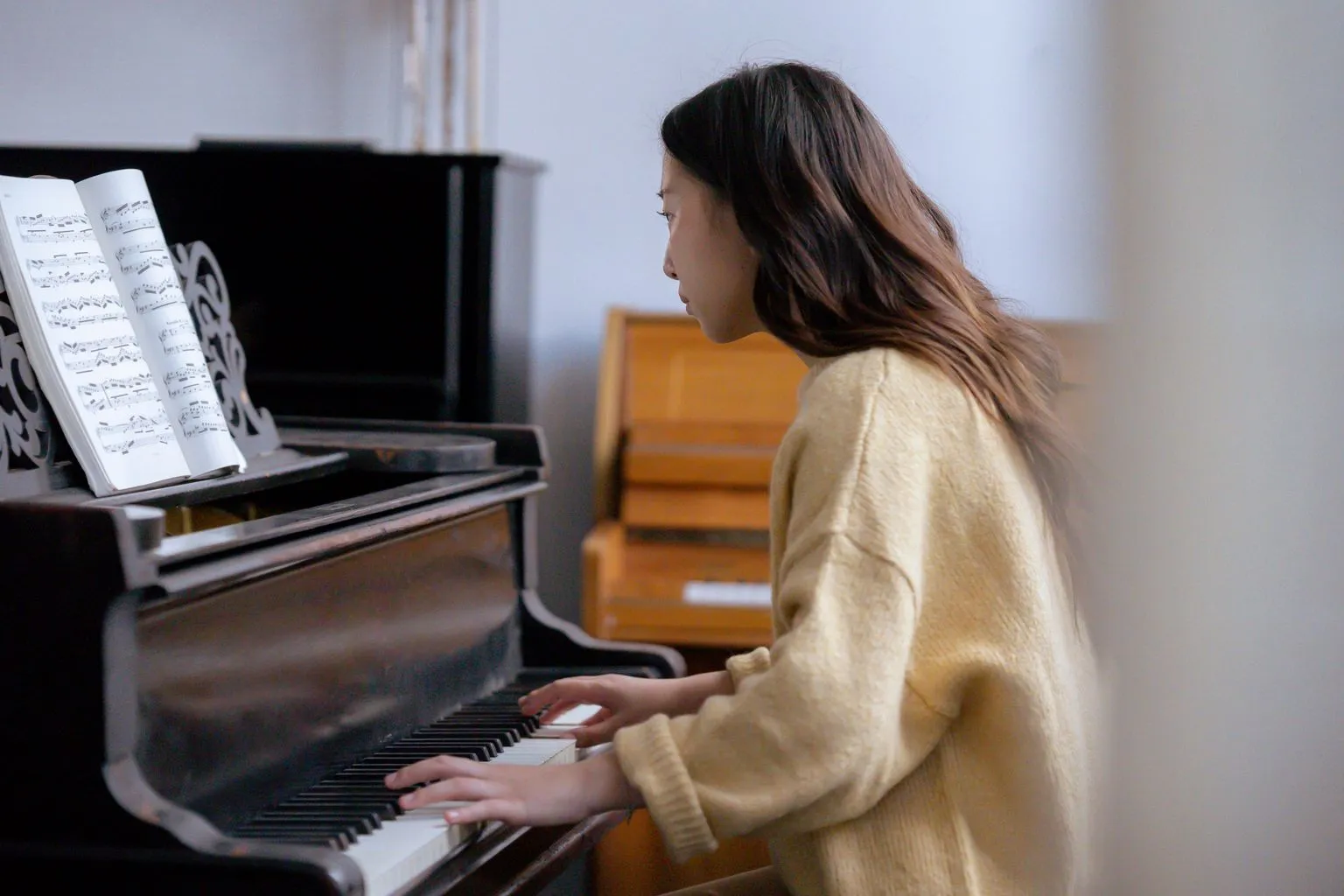
In this guide (8 sections)
- So, is piano actually hard to learn?
- Which parts of piano are hardest for adults?
- How can I make each hard part easier?
- Can I learn without reading sheet music?
- Can you really learn piano in 30 days?
- Is it too late to start as an adult?
- What should I look for in a self-study course if I find it hard?
- Where does this fit in your learning plan?
So, is piano actually hard to learn?
Piano is easy to begin, demanding to master, and how hard it feels depends on what you want to play. Strumming a few chords under a melody is a different job from performing a Chopin piece.
The start feels harder than it is. Your hands are making new movements, and there’s no instant payoff, so every small step can feel clumsy.
Adults learn differently from children. You usually bring more patience and focus, but less free time. How fast you progress depends on how often you practice and what you’re aiming for.
Which parts of piano are hardest for adults?
Coordination, reading music, regular practice and rhythm are the four parts adult beginners most often find tricky. Finger strength is rarely the real problem. It’s brain-to-hand coordination.
Coordinating two hands
Two-hand coordination is hard because your left hand and right hand must do different things at once. It’s like patting your head while rubbing your stomach. Example: hold one chord with your left hand while your right hand taps a steady beat.
Reading sheet music
Reading sheet music is hard because you’re decoding symbols while also moving your fingers. It’s a bit like reading aloud in a new language. You can add it gradually, which is covered in our guide to reading sheet music for piano.
Keeping up regular practice
Regular practice is hard because adult schedules are full, and this is where many beginners stall. Ten minutes after your morning coffee beats a plan for an hour you never find.
Timing and rhythm
Rhythm (how long and how strongly each note lands) is hard because your hands may rush when you’re nervous. Counting “1, 2, 3, 4” out loud while you play a single chord helps.
How can I make each hard part easier?
Each difficulty has a small, specific fix: slow hands-separate practice, chords before full notation, and short sessions you can repeat daily.
Hands separate, then together, at slow speed
Slow, hands-separate practice gives your brain time to learn each part before combining them. Play the left hand alone until it feels dull, then add the right.
Learn chords before full notation
Learning chords first (a chord is three or more notes played together) lets you make music sooner. Worked example: play C, F and G chords in your left hand, one per bar, and tap a steady rhythm of four beats with your right hand on one note. Our page on easy piano chords for beginners shows the shapes.
Short daily sessions beat long rare ones
Short daily sessions work because your hands and brain get repeated contact with the same movements. Aim for 10 to 20 minutes, and see our piano practice routine for beginners for a layout.
Can I learn without reading sheet music?
Yes, you can start with chords and playing by ear (working out music from sound rather than from the page), and many adults begin this way.
The honest limit is that reading opens up a huge amount of written music later. You can add it a little at a time once chords feel comfortable.
Some courses teach rhythm-style playing and chords first. Pianoforall is one: the maker says it teaches rhythm-style piano, chords, blues, jazz and classical, and that learning to play first makes reading easier. That’s the maker’s own view.
Can you really learn piano in 30 days?
In 30 days you can realistically learn a few chords and one simple song, but learning piano is not a finished state. Be wary of any promise of fast mastery.
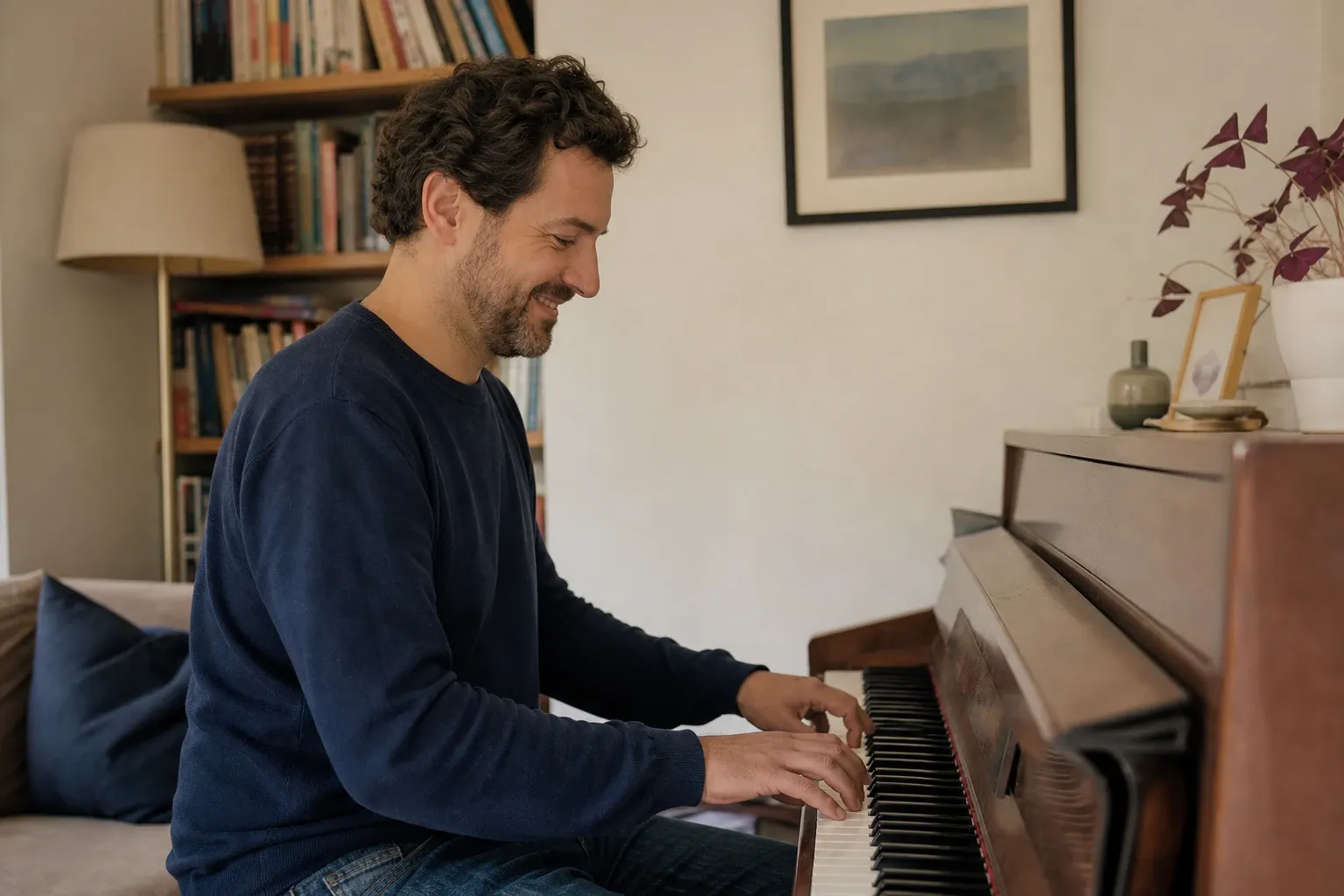
Judge progress by small goals instead. Good month-one goals:
- Play three chords cleanly, such as C, F and G.
- Switch between them in time with a steady count.
- Play one simple song with a chord pattern.
These depend on practice time, and results vary from person to person.
Is it too late to start as an adult?
It isn’t too late. Adults can start at any age, though progress depends on practice habits more than birthdays.
Returning learners often find old skills feel familiar but rusty. Start slowly and expect your hands to catch up before your memory does.
Self-study can work if you pick a structured course and keep a routine. Our guide to teaching yourself piano at home covers the setup, and the adult piano learner overview puts it in context.
What should I look for in a self-study course if I find it hard?
Look for a step-by-step order, video lessons you can replay, chords and rhythm early on, and short lessons.
By the maker’s description, Pianoforall fits these: video lessons and downloadable ebooks, with rhythm-style playing and chords first. It’s $49 once for the complete course, and you’ll need at least 61 full-size touch-sensitive keys and a sustain pedal.
It may not suit you if you want a classical-only, teacher-led path. A self-paced course doesn’t watch your hands.
Our button opens Pianoforall’s 7-day trial page, where you can buy outright or start the trial (the trial needs payment details and charges $49 when it ends unless you cancel).
Try or buy Pianoforall on the official site60-day money-back guarantee
Where does this fit in your learning plan?
How hard piano feels is mostly a question of picking small steps and sticking with them. Our adult piano learner overview maps the whole journey.
If you’re ready to begin, read how to start learning piano. To weigh your options, see the best way to learn piano.
Common questions
- How long should a beginner practice each day?
Around 10 to 20 minutes a day is a manageable starting point for most adults. Short, regular sessions help your hands and brain repeat new movements. Increase the time only when it feels easy, and skip long sessions that you can’t keep up.
- Is piano harder than guitar?
Neither is clearly harder. Piano lays notes out in a clear row, which many find easier for seeing chords, but it asks both hands to work independently. Guitar needs finger pressure and strumming control. Pick the sound you love most.
- Do I need a teacher to learn piano?
Not necessarily. Many adults start with a structured self-study course and a steady routine. The trade-off is that nobody watches your hands, so you may miss habits a teacher would catch. A teacher helps most if you want classical or exam-style training.