Heads up: some links here are affiliate links. If you buy through one, we may earn a commission; your price stays the same. Details
In this guide (10 sections)
- Quick picks
- Which online piano lessons suit an adult beginner?
- How the options compare: style, pacing, format and cost
- How much do online piano lessons cost compared with a teacher?
- Pianoforall: what it teaches and who it suits
- Can I teach myself piano, and what does self-study miss?
- Why do adult learners quit, and how do you avoid it?
- Do I need a piano or keyboard before I start?
- Where this fits in your piano journey
- Our pick for most adult beginners
Quick picks
Pianoforall is our top pick for most adult beginners who want to play songs with chords at their own pace. We compared published offers on teaching style, pacing, format, cost model and refund terms. This assessment uses published course information; we have not completed Pianoforall.
Our top pick: Pianoforall
- One payment, no subscription. The complete course is $49, paid once.
- Chords and rhythm first. The maker says it starts with rhythm-style playing, then moves through blues, jazz and classical pieces.
- Any decent keyboard works. You need at least 61 full-size, touch-sensitive keys and a sustain pedal, and the keyboard doesn’t have to connect to anything.
There are two ways to buy: pay $49 now, or start a seven-day trial that needs your payment details and charges $49 once unless you cancel through ClickBank before the trial ends. See the current course, price and trial billing terms on the vendor’s site.
Try or buy Pianoforall on the official site60-day money-back guarantee
The other options, by what they’re best for:
- ArtistWorks: best for video lessons from named teachers, with optional teacher video feedback at some schools.
- Pianote: best subscription for a long refund window (90 days on first-time direct purchases).
- Piano Marvel: best for trying a free tier before a monthly plan.
- Yousician and Simply Piano: apps that listen as you play; check their current prices in each app.
- One-on-one teacher: best for personal correction of posture and technique.
Which online piano lessons suit an adult beginner?
The right online piano lessons for an adult beginner are the ones that match your goal: songs with chords, instant correction, or a personal teacher. We judged each option on six things: teaching style, pacing, format, cost model, who it suits and who it doesn’t.
Can you teach yourself? Yes, plenty of adults start with self-study. What you give up is someone watching your hands.
Pianoforall: self-paced course for chords and playing by ear
Pianoforall is a one-off video course with downloadable ebooks that teaches chords and rhythm before sheet music. You work through it at your own speed.
Pros
- $49 once for the complete course
- Ebooks with embedded video and audio work offline
- Covers pop-style rhythms, blues, jazz and classical, the maker says
- Includes The Piano Lounge community, the maker says
Cons
- No live feedback on your technique
- Your keyboard doesn’t connect, so nothing checks your notes
- Classics By Ear courses are sold separately
Feedback apps such as Yousician
Feedback apps like Yousician and Simply Piano listen to you play and tell you if you hit the right notes. Their current prices and refund terms aren’t covered here, so check inside each app before you subscribe.
Pros: instant note checking, game-style progress. Cons: usually a recurring subscription; correct notes aren’t the same as good hand position.
Video subscription and teacher-led options such as ArtistWorks
ArtistWorks sells a monthly or annual membership to one piano school, with lessons from named teachers. Premium plans add teacher Video Exchanges where a school offers them.
Pros: teacher-led video lessons; classical, popular and country schools; optional video feedback. Cons: auto-renewing; Premium availability varies by school; 14-day refund window.
One-on-one online teacher lessons
One-on-one teacher lessons over video give you live, personal feedback no app or course can match. They cost the most per hour and need a fixed time slot.
Pros: posture and technique correction, a plan built for you. Cons: ongoing cost, scheduling, quality varies by teacher.
How the options compare: style, pacing, format and cost
Pianoforall is the only option in this table with a single one-time payment; the rest are subscriptions or hourly fees. Prices below are what each maker published; confirm them on the maker’s pricing page before you pay.
| Option and plan | Teaching style | Pacing and format | Cost model | Trial or refund terms | Suits | Doesn’t suit |
|---|---|---|---|---|---|---|
| Pianoforall complete course | Chords, rhythm and ear first, then reading | Self-paced video lessons and ebooks | $49 one-time payment; no subscription | 7-day trial needs payment details, then $49 once unless cancelled via ClickBank before it ends. 60 days from payment, requested through ClickBank | Chord and ear learners on a budget | People who want live correction |
| ArtistWorks piano school | Teacher-led video lessons | Self-paced; Premium Video Exchanges where offered | Standard $19.99 monthly or $191.88 annual; Premium $29.99 monthly or $287.88 annual where offered | Free 7-day trial; refund within the first 14 days of a new subscription via customer service | Learners who want named teachers | People avoiding auto-renewal |
| Pianote (Musora) | Video lessons and courses | Self-paced; website and apps | Lessons only $25 monthly or $229 annual; lessons plus songs $30 monthly or $279 annual | 7-day trial becomes the chosen paid plan unless cancelled; 90-day money-back period via Musora support | Learners wanting a long refund window | People wanting one payment |
| Piano Marvel | Songs, exercises, video lessons | Supported devices | Free tier $0; Premium $17.99 monthly or $129.99 annual (billed upfront) | 14 days from purchase via support; Apple purchases via Apple | Trying free first | Check equipment compatibility before paying |
| Flowkey free account | Songs and course lessons | App | $0 for limited content; paid prices vary by country, shown in the app | 14-day money-back policy; app store terms apply to store purchases | Sampling songs | Anyone wanting the full library free |
| Listening apps (such as Yousician) | Apps that hear the notes you play | App | Monthly or annual subscription; prices shown in each app | Varies by app | Instant note feedback | People who want technique or posture correction |
| One-on-one teacher | Personal lessons | Scheduled, live | Per lesson; varies by teacher | Set by the teacher | Technique and posture help | Tight budgets or schedules |
A refund window is a purchase term, not a promise of results. Our Pianoforall vs Pianote, Flowkey and other courses page goes deeper on course-by-course detail.
If the one-payment, chords-first route fits you, check the current Pianoforall price and trial terms.
Try or buy Pianoforall on the official site60-day money-back guarantee
How much do online piano lessons cost compared with a teacher?
Online piano lessons usually cost far less per hour of practice than a private teacher, but subscriptions add up over a year. The fairest way to compare is cost per hour.
Cost per hour across formats
Cost per hour is the total you pay in a year divided by the hours you actually practise. Here’s the method with an example routine of 20 minutes a day, five days a week, which is about 87 hours a year:
- Pianoforall: $49 ÷ 87 = about $0.56 an hour
- ArtistWorks Standard annual: $191.88 ÷ 87 = about $2.21 an hour
- Pianote lessons only, annual: $229 ÷ 87 = about $2.63 an hour
- A teacher: divide your teacher’s fee by the lesson length in hours, then add your practice hours at home, which are free
Swap in your own hours and prices. Practise less, and every option costs more per hour.
One-off course vs monthly subscription vs private teacher
A one-off course costs the same whether you take two months or two years. A monthly subscription keeps charging: Pianote lessons-only at $25 a month is $300 over 12 months, against $229 for its annual plan. Private lessons charge per session for as long as you keep going.
Free lessons and trials let you sample, but they usually leave out the full library or feedback. Our guide to free piano lessons for adult beginners covers what free options include and leave out.
Pianoforall: what it teaches and who it suits
Pianoforall teaches adults to play with chords and rhythm first, then adds reading music. It’s a self-paced course, not live individual tuition.
What is in the course
The course is a set of video lessons inside the Pianoforall Academy plus downloadable ebooks with embedded video and audio. The maker says the books cover:
- Rhythm-style piano with 15 popular rhythms, ballads and chord progressions (a chord progression is a set of chords played in order)
- Jazz runs, riffs, chords and blues scales
- Advanced blues and improvising over blues rhythms
- Classical pieces, reading sheet music alongside playing by ear
The maker also says it gives a deep understanding of music theory, meaning how chords and harmony are built. That’s the maker’s claim, and results depend on your practice.
Who should pick it
Pianoforall suits absolute beginners and returners who want pop music, blues and jazz styles through chords. It also fits players of other instruments who already know some theory and want piano chords. For a fuller look, read our Pianoforall review.
Who may prefer live feedback or another course
Pianoforall can’t watch your hands or correct your posture. Skip it if you want:
- Instant note-by-note checking (try a feedback app)
- Personal technique correction (try a teacher)
- A strict classical reading-first method
The vendor advertises a 60-day money-back guarantee: request it through ClickBank within 60 days of payment. Buy only from the official site. Check the current price and guarantee terms there.
Try or buy Pianoforall on the official site60-day money-back guarantee
Can I teach myself piano, and what does self-study miss?
You can teach yourself piano with a structured course, though self-study misses personal correction of posture and hand position. If something feels uncomfortable, a teacher or a few lessons can help.
Reading music versus chords and ear comes down to the music you want. Classical pieces need sheet music. Pop songs and singalongs mostly need chords.
In your first month, focus on:
- Finding notes and a relaxed hand position
- Three chords: C (C-E-G), F (F-A-C) and G (G-B-D)
- Steady rhythm, counting 1-2-3-4
- One or two easy songs
The 80/20 idea means putting most of your time on the few skills that matter most. For a beginner, that’s chord changes and steady rhythm.
Quick tip: Play C, then F, then G, four beats each, for two minutes. Change chords without stopping, even if it’s slow.
Why do adult learners quit, and how do you avoid it?
Adult learners usually quit because of little time, dull material, no feedback or expectations that are too high. Each has a fix.
- Little time: plan short sessions of 15 to 20 minutes most days rather than long weekend ones.
- Dull material: pick a course whose music you actually want to play.
- No feedback: record yourself on your phone and listen back.
- Big expectations: measure progress by small wins, like a cleaner chord change.
How long should you take lessons? As long as you enjoy them. There’s no set timeline, and everyone moves at a different pace.
Example routine: 5 minutes of warm-up chords, 10 minutes on your current lesson, 5 minutes playing a song you already like.
Do I need a piano or keyboard before I start?
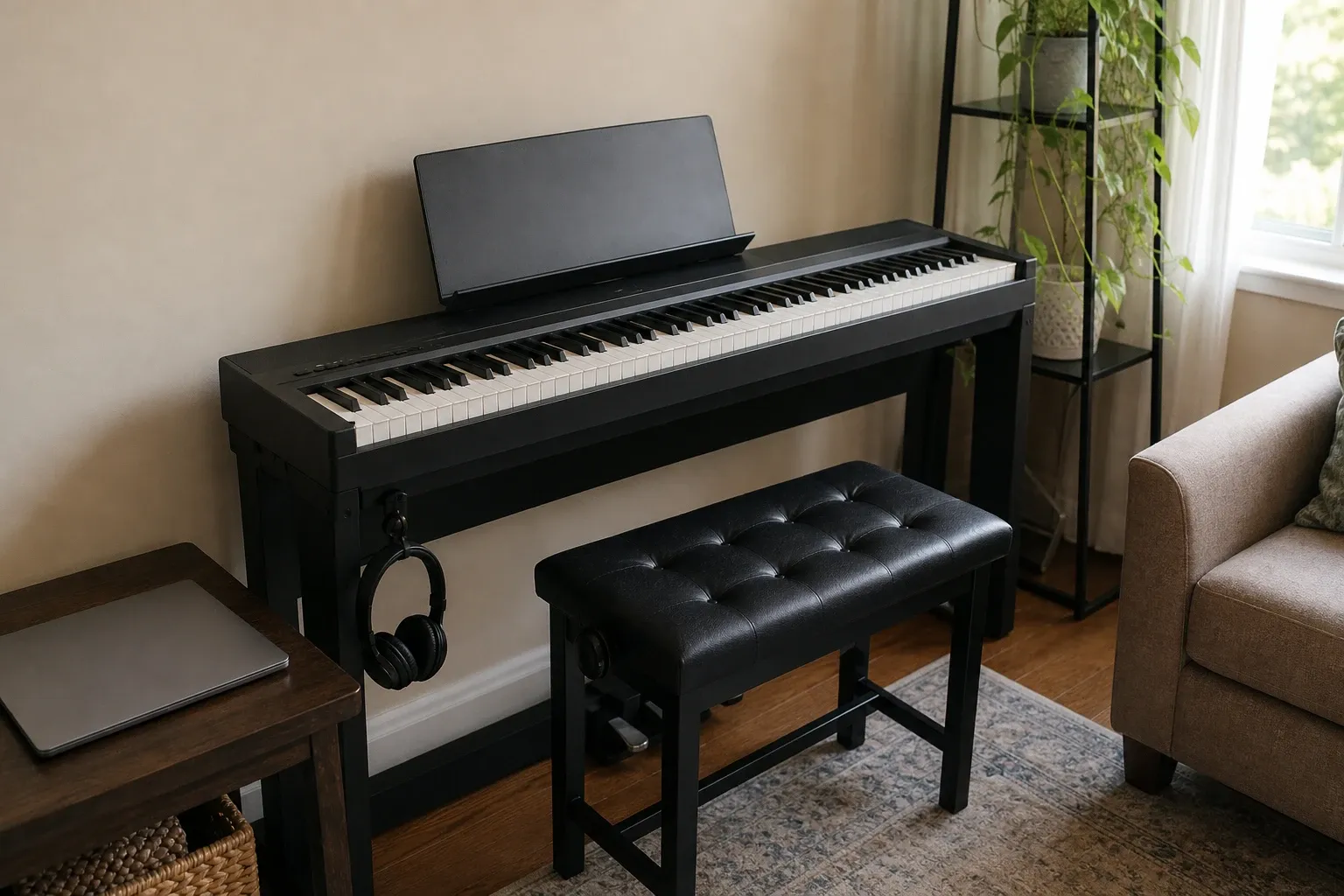
You need a keyboard before starting, and one with full-size keys is enough. Pianoforall asks for at least 61 full-size, touch-sensitive keys and a sustain pedal.
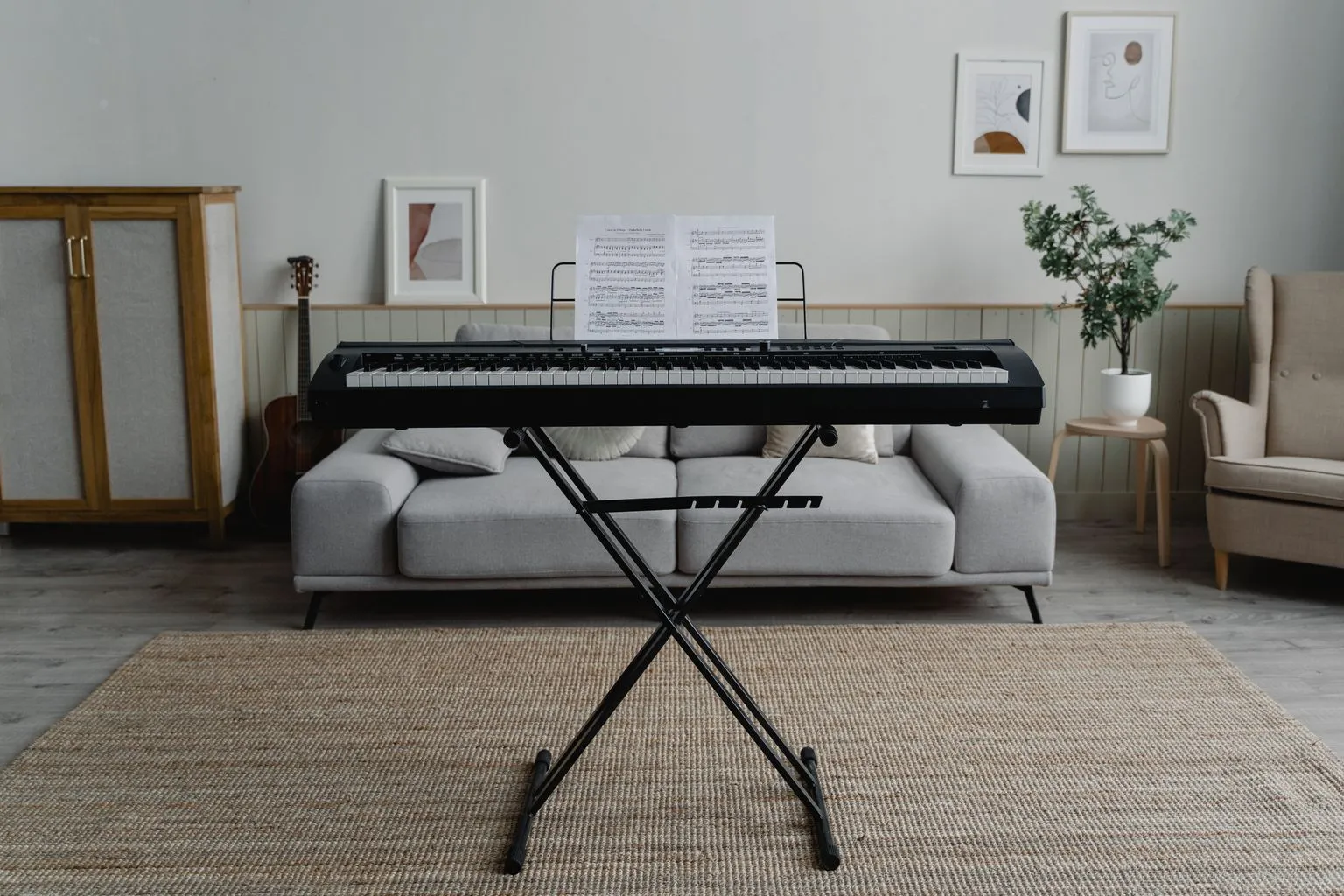
A MIDI keyboard, one that connects to a device by cable, only matters for apps that check your playing through a connection. Some apps listen through a microphone instead. Add a stand and a chair at a comfortable height, and you’re set.
Where this fits in your piano journey
Picking online lessons is one step in learning piano as an adult. Our practical overview for the adult piano learner covers goals, practice and motivation in one place. If you’re still weighing apps, books and teachers, see our guide to the best way to learn piano.
Our pick for most adult beginners
Pianoforall is the best pick for most adults who want chords and playing by ear: one $49 payment, self-paced video lessons, offline ebooks, and no connected keyboard needed. If you want live technique feedback, a teacher or ArtistWorks Premium may suit you better.
Take the next step and check the current Pianoforall course, price and trial billing terms on the vendor’s site.
Try or buy Pianoforall on the official site60-day money-back guarantee
More guides in Courses and lessons
Common questions
- Are online piano lessons worth it for adults?
Online piano lessons can be worth it for adults who want flexible, low-cost practice at home. They work best if you practise regularly, often 15 to 20 minutes most days. They can’t replace a teacher’s personal feedback on technique, so some adults combine a course with occasional lessons.
- Can I learn piano without reading sheet music?
Yes. Many adults start by learning chords and playing by ear, which lets you accompany pop songs and singalongs. Reading sheet music becomes important if you want to play classical pieces as written. Some courses teach chords first and add reading later, so you can do both.
- Is a free trial worth using before paying?
A free trial is useful for checking whether a course’s teaching style suits you. Read the billing terms first: many trials need payment details and turn into a paid plan unless you cancel before the trial ends. Set a reminder a day or two before the end date.