Heads up: some links here are affiliate links. If you buy through one, we may earn a commission; your price stays the same. Details
In this guide (11 sections)
- Quick verdict
- Quick picks
- Which way to learn piano fits you? Take the quiz
- Self-study course, teacher, books or video: how do they compare?
- Can I learn piano without learning to read notes?
- Is 40 too old to learn piano, and does starting age matter?
- Why do piano students quit, and how do you avoid it?
- What does Pianoforall offer for self-study learners?
- What do you need before you start?
- Where this fits in learning piano as an adult
- Our pick for most adult learners
Quick verdict
For most adults who want to play songs with chords at home, a one-payment self-study course is the easiest place to start.
- Chords and playing by ear, on your own time: a self-study course such as Pianoforall.
- Live correction of your hands and posture: a local or online teacher.
- Classical reading from the first page: a method book such as Alfred’s or Faber.
- A steady stream of new lessons and songs: a subscription like Pianote.
- Not sure yet: take the quiz below.
We judged each route on five things: teaching approach, feedback, flexibility, what you need to start, and price and refund terms.
Quick picks
Pianoforall is our top pick for most adult beginners and returners who want to play by chords.
Our top pick: Pianoforall. It’s one payment of $49 for the complete course, not a subscription. The maker says it starts with rhythm-style playing and chords, then moves into blues, jazz and classical. It works with a keyboard of at least 61 full-size touch-sensitive keys and a sustain pedal, and the ebooks download for offline use.
Check the current Pianoforall course, price and trial billing terms on the vendor’s site.
Try or buy Pianoforall on the official site60-day money-back guarantee
- Alfred’s Basic Adult Piano Course: best for a low-cost printed book with a chord approach, ideally used with a teacher.
- Faber Adult Piano Adventures: best for a printed all-in-one book mixing lessons, technique and theory.
- Pianote: best subscription option, with monthly or annual plans.
- A private teacher: best for live feedback on technique.
Which way to learn piano fits you? Take the quiz
The quiz matches your goal, schedule and feedback needs to one learning route. It’s a decision aid, not a prediction of how fast you’ll improve. Answer honestly, then read your result.
Question 1: What do you want to play?
Your goal decides most of your answer. Pick the closest:
- A. Pop songs and ballads using chords (groups of notes played together)
- B. Classical pieces from sheet music
- C. A bit of everything, maybe blues or jazz later
Question 2: How much time can you give each week?
Your weekly time and how fixed it is matter more than the total hours.
- A. Short sessions, 15 to 20 minutes on most days, at changing times
- B. A fixed slot each week I can keep for a lesson
- C. It varies a lot week to week
Question 3: How do you want feedback?
Feedback style is where routes differ most.
- A. I’m fine checking myself against videos and recordings
- B. I want someone to watch my hands and correct me
- C. I’d like a community to ask questions in
Your result
Mostly A or C answers point to a self-study course. Mostly B answers point to a teacher or a method book with a teacher.
- Mostly A: a chord-led self-study course. Suits least: people who want classical reading first.
- Mostly B: a teacher, possibly with Alfred’s or Faber books. Suits least: people with unpredictable schedules or tight budgets.
- Mostly C: a video course with community access, either one-payment or subscription. Suits least: people who need a person correcting technique.
If the quiz pointed you toward chords and flexible time, a one-payment course is the simplest next step.
Try or buy Pianoforall on the official site60-day money-back guarantee
Self-study course, teacher, books or video: how do they compare?
The four routes differ most on cost structure, feedback and whether they start from reading notes or from chords and ear.
Side-by-side table
The table compares exact plans and published terms.
| Option | Exact plan | Method | Feedback | Access | Price | Trial and refund |
|---|---|---|---|---|---|---|
| Pianoforall | Complete course; lifetime access while offered and supported by Pianoforall Academy | Chords and rhythm first, then blues, jazz, classical (maker’s description) | Self-check; The Piano Lounge community | Online Academy plus downloadable ebooks; at least 61 full-size touch-sensitive keys and a sustain pedal | $49, one-time payment | Seven-day trial needs payment details, then $49 once unless cancelled before it ends. Refund: request through ClickBank within 60 days of payment |
| Alfred’s Basic Adult Piano Course | Lesson Book 1, item 00-2236 | Chord approach in print | None built in; publisher says most effective with a teacher or experienced musician | Printed book | $14.99, one book; shipping may apply | 30 days from receipt for defective, damaged or wrong items; replacement, not a general refund |
| Faber Piano Adventures | Adult All-in-One Course Book 1, print | Lessons, technique and theory | Online audio/video support | Printed book | $19.99, one book; shipping may apply | 30 days for items bought from pianoadventures.com in original condition; buyer pays return shipping |
| Pianote | Lessons only or lessons plus songs | Modern, chord-led method | Community (maker’s description) | Website and mobile apps | $25/month or $229/year (lessons); $30/month or $279/year (with songs) | Seven-day trial becomes the paid plan unless cancelled; 90-day money-back on first-time direct purchases |
| Private teacher | Weekly lessons | Often a classical method | Live, individual | Fixed lesson times | Per lesson, varies locally | Set by the teacher |
Who each route suits least
Each route has a clear group who should skip it.
- Self-study course: skip if you want someone watching your technique, or a reading-first classical path.
- Teacher: skip if your week can’t hold a fixed slot or ongoing fees don’t fit your budget.
- Books alone: skip if you need audio, video or any check on your playing; see our guide to books to teach yourself piano.
- Subscription app: skip if you dislike recurring charges or forget to cancel trials.
Quick tip: Before buying any course, check whether ebooks or sheet music come with it and whether lessons are paced for adults.
Can I learn piano without learning to read notes?
Yes, you can learn piano by chords and ear before reading sheet music. Pianote’s writer notes that you don’t need to read sheet music to become a good player, while adding that reading opens up far more music.
Chord-based playing means learning shapes like C major (C, E, G) and a simple rhythm in the left hand. Ear training, learning to recognise notes and chords by sound, lets you pick out songs you know.
Sight-reading, playing from notation on the spot, matters early if you want classical pieces or to play with others. Everyone else can add it later.
Try this: play C, then G, then A minor, then F, holding each for four slow counts. Those four chords sit under a huge number of pop songs.
Is 40 too old to learn piano, and does starting age matter?
No, 40 isn’t too old to start learning piano as a hobby. Adults often bring focus, patience and a clear idea of the music they want.
For hobby playing, a routine you can keep matters far more than your starting age. Progress varies with practice, goals and the route you choose, so no honest page can give you a timeline.
This suits returners too: old reading skills often come back with steady practice, even if your fingers feel rusty at first.
Try this: pick one song you love and set a goal to play only its chords, slowly, before thinking about melody.
Why do piano students quit, and how do you avoid it?
Piano students usually quit because of unclear goals, music they don’t enjoy, sessions that run too long or no feedback at all. Each of these is fixable.
Common beginner mistakes
Most beginner mistakes are about pace, not talent.
- Rushing past slow practice and speeding up too soon
- Skipping rhythm, the pattern of beats and timing, to chase notes
- Ignoring hand independence, getting each hand to do its own job
- Playing only pieces that bore you
A metronome, a device or app that clicks a steady beat, fixes a lot of rhythm trouble. Counting “1 and 2 and 3 and 4 and” out loud helps too.
A manageable practice routine
A practice schedule you can keep beats an ambitious one you abandon. Try 15 to 20 minutes on most days:
- 3 minutes: a few scales, notes played in step order, slowly
- 7 minutes: chords with the metronome at a slow speed
- 7 minutes: a song you actually want to play
See more ideas in our practical overview for the adult piano learner.
What does Pianoforall offer for self-study learners?
Pianoforall is a self-paced online course, not live individual tuition, built around chords and rhythm-style playing. This assessment uses published course information; we have not completed Pianoforall.
What is in the course
The maker says the course combines video lessons in the Pianoforall Academy with downloadable ebooks that have video and audio built in. It lists:
- A rhythm-style book with 15 popular rhythms, ballads and chord progressions
- Jazz piano: runs, riffs, chords and blues scales
- Advanced blues and improvising over blues rhythms
- Classical pieces, reading sheet music alongside playing by ear
- The Piano Lounge community for questions and sharing progress
The maker also says it teaches reading more easily by learning to play first.
Plans, price and payment terms
The complete course costs $49, paid once, with no subscription. You can pay now, or start a seven-day trial that needs your payment details and then charges $49 once unless you cancel through ClickBank before it ends.
The vendor advertises a 60-day money-back guarantee: you request a refund through ClickBank within 60 days of payment. Lifetime access means while the course is offered and supported. Buy only from the official site. Classics By Ear courses are sold separately.
Who it suits and who should skip it
Pianoforall suits adults who want chords and playing by ear at home on a flexible schedule, plus players of other instruments who already know some theory.
Skip it if you want live feedback on technique or a strict, reading-first classical method. A course can’t watch your hands. For more detail, read our full Pianoforall review.
See the current course contents, the $49 price and the trial billing terms on the vendor’s site.
Try or buy Pianoforall on the official site60-day money-back guarantee
What do you need before you start?
You need a keyboard or piano with enough keys, plus a few simple practice tools. This isn’t an instrument-buying guide, just the basics.
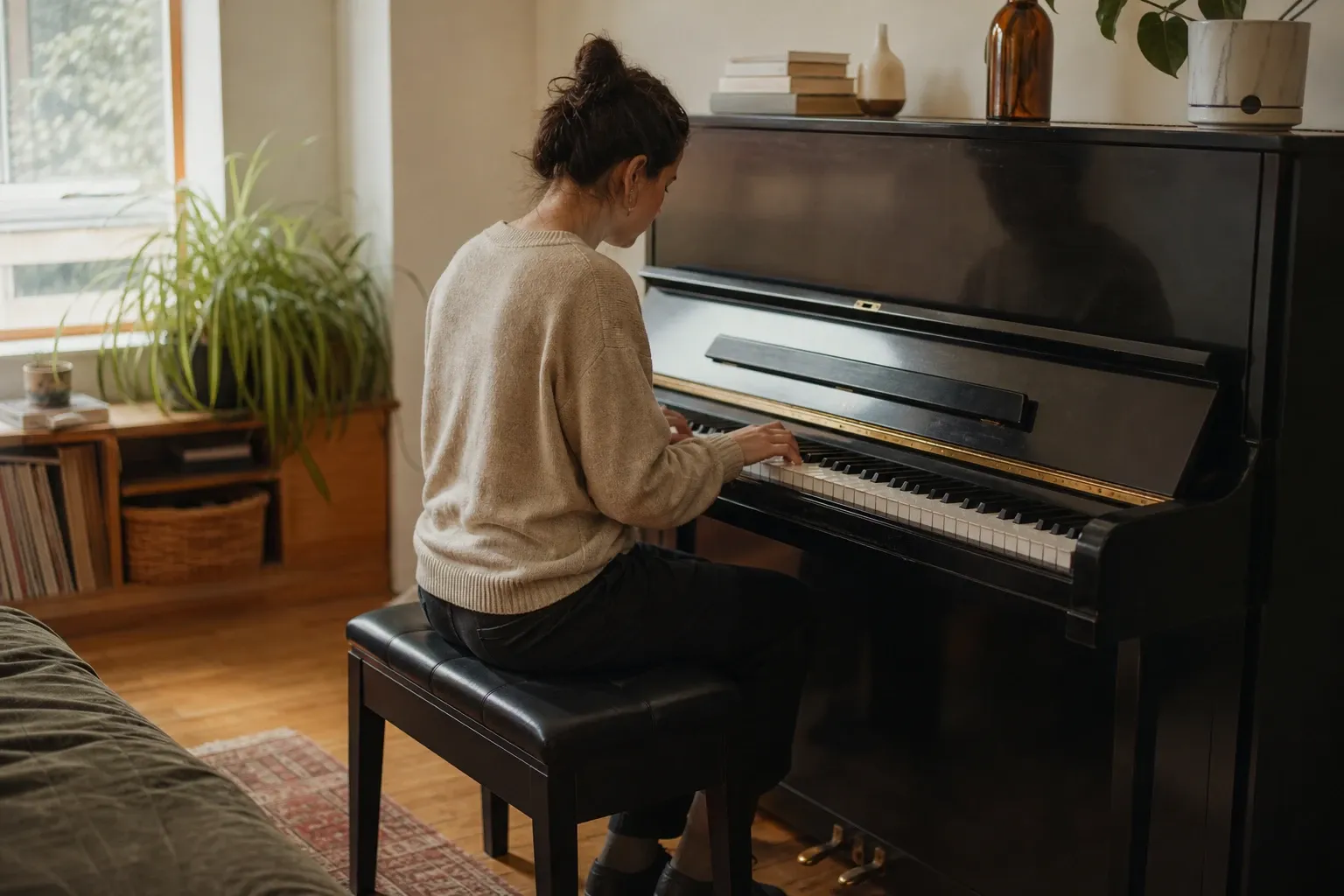
- Keys: Pianoforall asks for at least 61 full-size touch-sensitive keys and a sustain pedal.
- Feel: a digital piano with weighted keys, which push back like an acoustic piano’s, is a plus. Pianote notes that today’s digital pianos can closely mimic an acoustic piano’s feel.
- Tools: a metronome app and headphones for quiet practice.
On cost, teachers are ongoing fees, subscriptions renew, and books or a one-payment course are paid once. Our guide to the cheapest way to learn piano breaks this down further.
Where this fits in learning piano as an adult
Choosing a route is one step in learning piano as an adult. Once you’ve picked one, the next jobs are setting up your space, learning your first chords and building a routine.
Our hub, Learning Piano as an Adult, covers those steps in order. If you’re leaning toward an online option, compare platforms in our roundup of the best online piano lessons for adults.
Our pick for most adult learners
Pianoforall is the best pick for most adults who want chords, songs and playing by ear on their own schedule. It’s one $49 payment, works offline through downloadable ebooks, and the maker says it runs from rhythm-style playing through blues, jazz and classical. Results aren’t guaranteed, and the 60-day refund is requested through ClickBank within 60 days of payment.
If you want live correction, a teacher is the better fit. If you prefer print, Faber or Alfred’s books are a cheap start. If you like ongoing new content, Pianote’s subscription may suit you.
Check the Pianoforall price, trial billing and refund terms on the official site before you decide.
Try or buy Pianoforall on the official site60-day money-back guarantee
Common questions
- Can I combine a self-study piano course with a few teacher lessons?
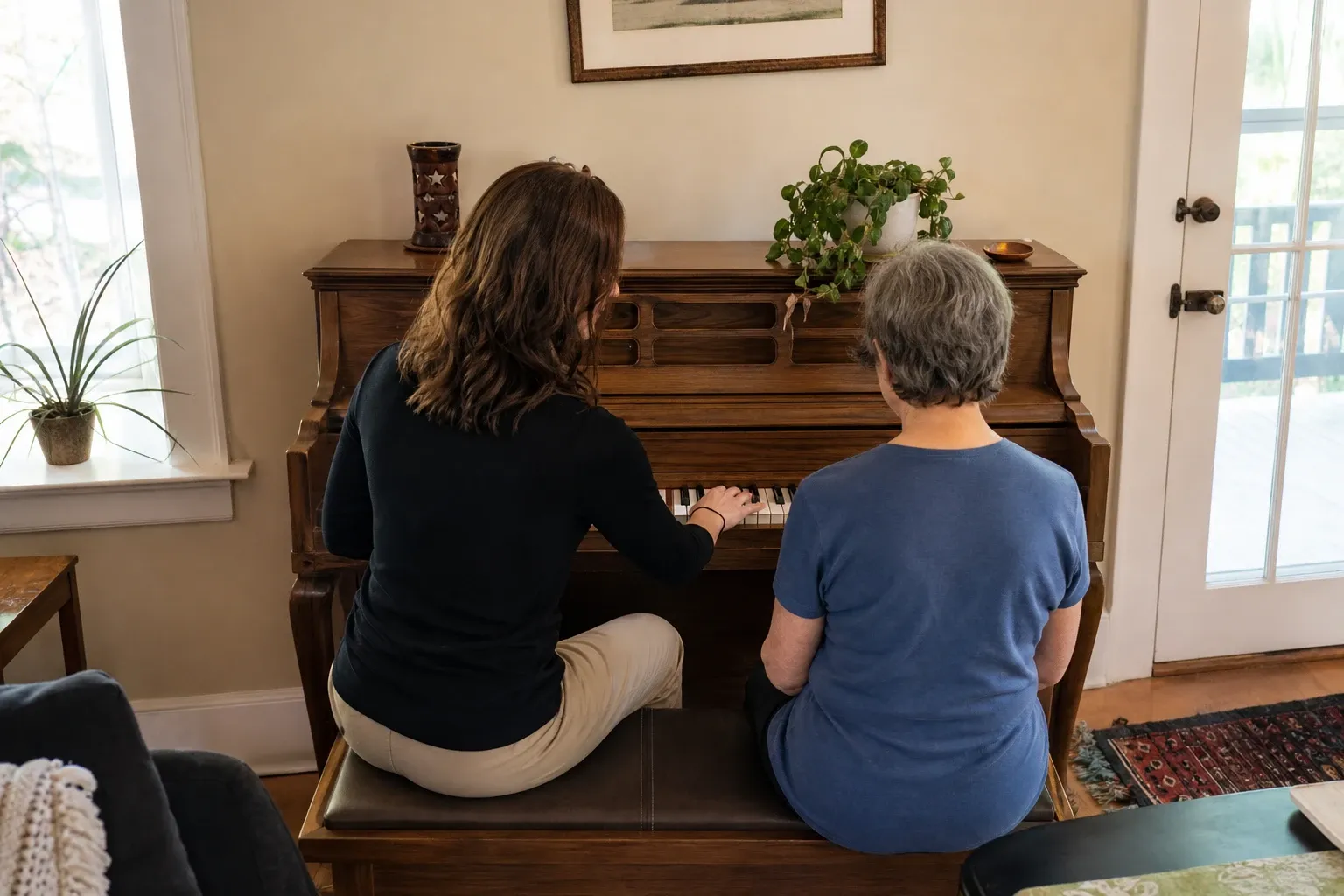
Yes, and it’s a sensible mix. Use a self-study course for daily practice and book an occasional lesson with a teacher to check your hand position, posture and technique. Bring specific questions or a piece you’re stuck on so each paid lesson focuses on what a course can’t see.
- Do I need an 88-key piano to start learning?
Not usually. Many beginner courses work on a smaller keyboard. Pianoforall, for example, asks for at least 61 full-size touch-sensitive keys and a sustain pedal. A full 88-key instrument helps later with classical pieces that use the whole range, but it isn’t required for chord-based songs.
- Is classical or modern piano style better for adults?
Neither is better overall; it depends on your goal. A classical method focuses on reading notation and technique for composed pieces. A modern method starts with chords and ear playing for pop, blues and jazz songs. Choose the style that matches the music you actually want to play.